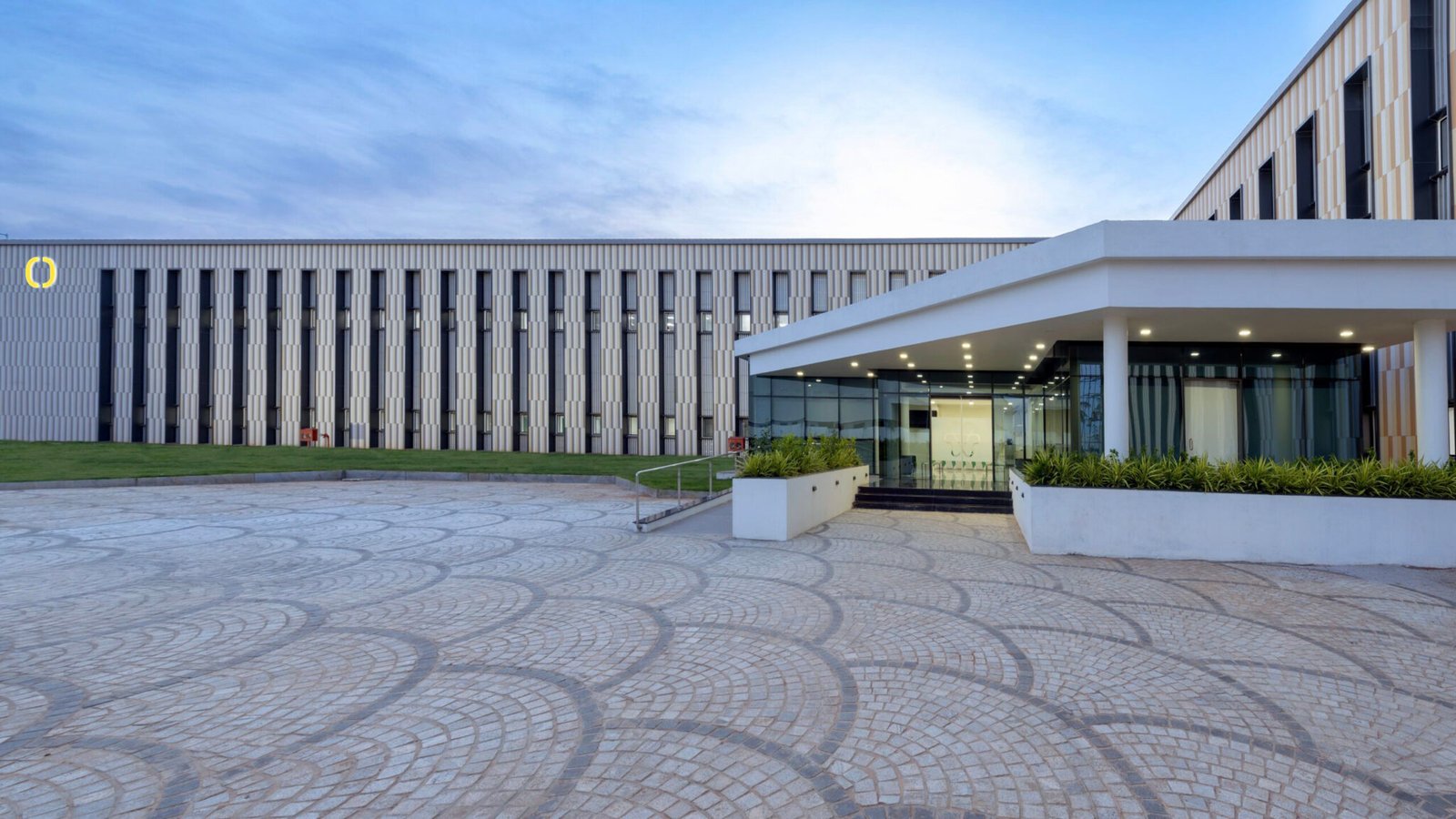
Capacity Expansion / Manufacturing Commissioning
Maruti Suzuki Commences Commercial Production at Second Kharkhoda Plant in Haryana
NSE
maruti
BSE
532500
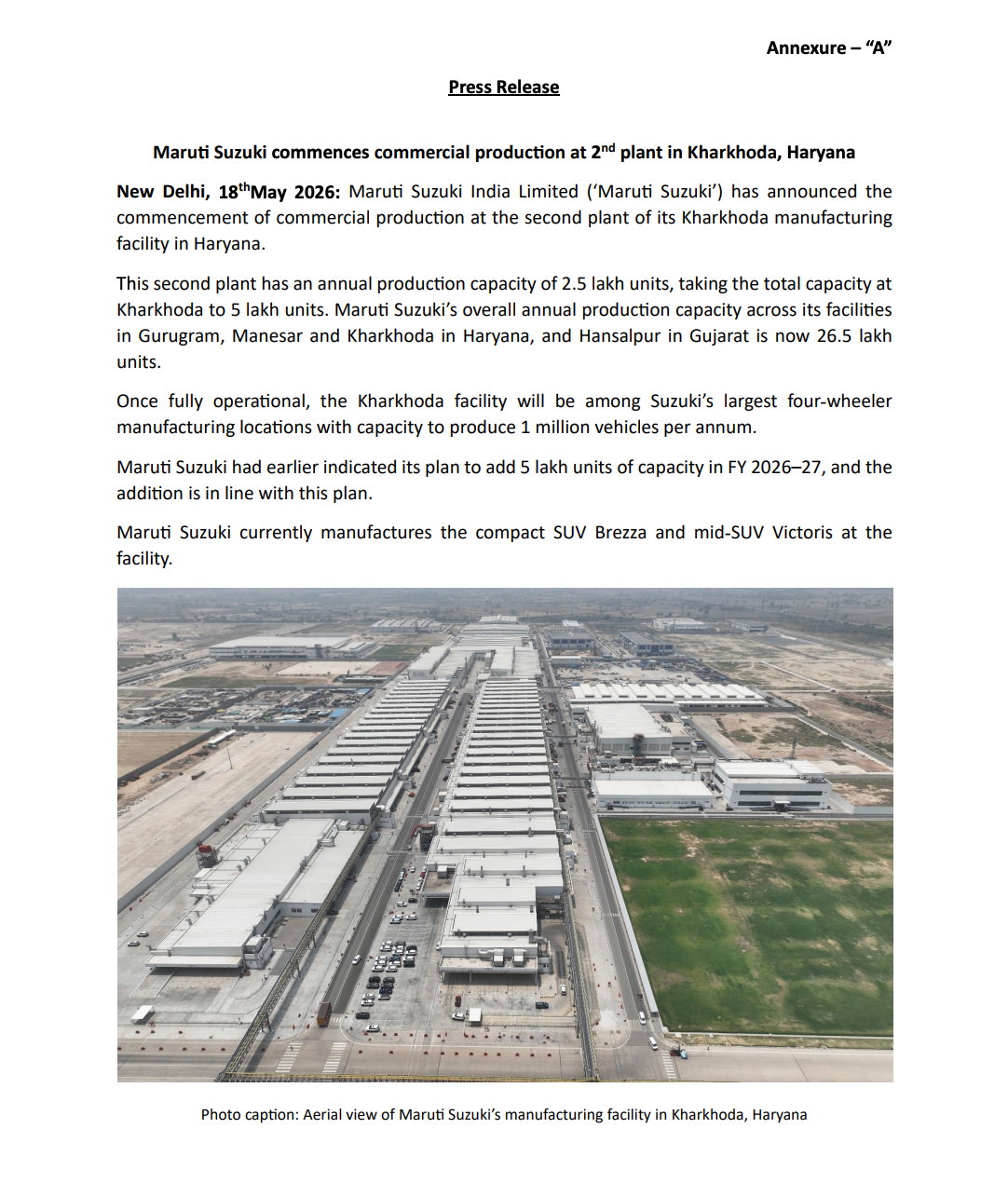
Maruti Suzuki India Limited has commenced commercial production at the second plant of its Kharkhoda manufacturing facility in Haryana. The new unit adds annual production capacity of 2.5 lakh vehicles, taking the company’s total installed production capacity to 26.5 lakh units per annum.
PRICE-SENSITIVE TRIGGER
Event: Commercial production begins at Maruti Suzuki’s second Kharkhoda manufacturing plant
Type: Capacity Expansion / Manufacturing Commissioning
Impact: Positive
Immediate Effect: The commissioning increases Maruti Suzuki’s annual production capacity and strengthens its long-term manufacturing scale in India.
Key Metrics:
- New plant annual capacity: 2.5 lakh units
- Total Kharkhoda capacity after second plant: 5 lakh units annually
- Maruti Suzuki’s total annual production capacity: 26.5 lakh units
- Long-term Kharkhoda facility target capacity: 10 lakh units per annum
Highlight Metric:
- Capacity Addition: 2.5 lakh additional vehicle production capacity commissioned at Kharkhoda.
What Happened ?
Maruti Suzuki India Limited announced the commencement of commercial production at the second plant of its Kharkhoda manufacturing facility in Haryana effective May 18, 2026.
The newly operational plant has an annual production capacity of 2.5 lakh units. With this addition, the total manufacturing capacity at the Kharkhoda facility has doubled to 5 lakh units annually, while Maruti Suzuki’s total installed production capacity across India has increased to 26.5 lakh units.
The company currently manufactures the Brezza and the mid-size SUV “Victoris” at the Kharkhoda facility.
Key Details
Capacity Expansion Details:
- Commercial production at the second Kharkhoda plant commenced from May 18, 2026.
- The first plant at Kharkhoda had started production in February 2025.
- The second unit adds another 2.5 lakh units of annual capacity.
Manufacturing Footprint:
- Total capacity across Gurugram, Manesar, Kharkhoda and Hansalpur facilities now stands at 26.5 lakh units annually.
- Once fully operational, Kharkhoda alone is expected to become one of Suzuki’s largest four-wheeler manufacturing hubs globally.
Strategic Importance:
- The expansion aligns with Maruti Suzuki’s earlier guidance to add 5 lakh units of fresh capacity in FY27.
- Increased capacity supports growing demand in SUV and passenger vehicle categories.
- The move strengthens the company’s long-term production and export capabilities.
Note:
- The foundation stone for the Kharkhoda facility was laid in August 2022 by Prime Minister Narendra Modi.
Risk Analysis
Key Risks:
- Demand slowdown in passenger vehicles could impact capacity utilization.
- Rising competition in the SUV and EV segments may affect future production mix.
- Large-scale manufacturing expansions increase operational and execution complexity.
- Input cost fluctuations and supply chain disruptions may impact margins.
Worst Case Scenario:
- If domestic auto demand weakens significantly, Maruti Suzuki could face lower plant utilization and delayed return on investment from the Kharkhoda expansion.
Risk Level: Low to Medium
Company Commentary
- Commercial production has commenced at the second Kharkhoda plant.
- The expansion is in line with Maruti Suzuki’s FY27 capacity addition plans.
- Kharkhoda is expected to evolve into one of Suzuki’s largest manufacturing hubs globally.
- Current production at the facility includes Brezza and Victoris SUVs.
Official Exchange Filing: Maruti Suzuki India Limited